Mammalia |
Cetartiodactyla |
Delphinidae
Môi trường: môi trường / vùng khí hậu / Mức độ sâu / phạm vi phân phối
Sinh thái học
Tầng nổi; Ở đại duơng, biển (Tài liệu tham khảo 75906); mức độ sâu 0 - 1316 m (Tài liệu tham khảo 116169). Tropical
208994 Tursiops truncatus gephyreus. Southwest Atlantic.
Chiều dài lúc trưởng thành đầu tiên / Bộ gần gũi / Khối lượng (Trọng lượng) / Tuổi
Chín muồi sinh dục: Lm ?, range 240 - 260 cm Max length : 380 cm TL con đực/không giới tính; (Tài liệu tham khảo 1394); Khối lượng cực đại được công bố: 650.0 kg (Tài liệu tham khảo 1394)
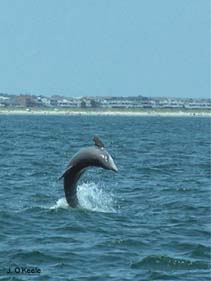
This coastal subspecies (Tursiops truncatus geyphyreus) can be distinguished from the nominate offshore subspecies (Tursiops truncatus truncatus) by the following diagnosable cranial features: W-shaped border of the antorbital notch (vs. U-shaped); barely or not visible interparietal bone (vs. clearly visible); cranial vertex from the posterior end of nasals to the nuchal crest is short and rectangular (vs. long and squared); left nasal bone noticeably smaller and more compressed antero-posteriorly than the right (vs. nearly symmetrical); Falciform lateral margin of the ascending process of right premaxilla (vs. straight or slightly concave); lateral margin of the ascending process of the maxillae over the preorbital process is deflected dorsally (vs. flat) (Ref. 128824).
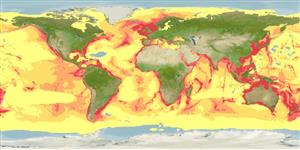
Preyed upon by great white sharks (Ref. 32140). Dolphins are directly caught for use as shark-bait in Sta. Ana and Aparri, Philippines (Ref. 77119). Found primarily in coastal and inshore regions of tropical and temperate waters of the world (Ref. 936) and deeper channels between islands (Ref. 122680). Also inhabits pelagic waters, such as those in the eastern tropical Pacific (Ref. 936). In herds of less than 20 individuals (Ref. 801). Feeds either cooperatively or in solitary. They can obtain prey via 'fish whacking' and steering fish onto mudflats (Ref. 122680). Feeds on fish (Refs. 801, 936) crustaceans, and cephalopods (Ref. 801).
Vòng đời và hành vi giao phối
Chín muồi sinh dục | Sự tái sinh sản | Đẻ trứng | Các trứng | Sự sinh sản | Ấu trùng
Tan, J.M.L. 1995 A Field Guide to the Whales and Dolphins in the Philippines. Makati City: Bookmark. 125 p. (Tài liệu tham khảo 936)
tình trạng CITES (Tài liệu tham khảo 108899)
CMS (Tài liệu tham khảo 116361)
Mối đe dọa đối với con người
Sử dụng của con người
Các nghề cá: tính thương mại; mồi: usually
FAO - Các nghề cá: hạ cánh, hồ sơ loài | FishSource |
Các công cụ
Thêm thông tin
Sinh thái dinh dưỡngThức ăn (con mồi)
Thành phần thức ăn
Thành phần thức ăn
Các động vật ăn mồi
Biến động dân sốSự sinh trưởngĐộ tuổi / kích thước tối đaChiều dài-trọng lượng tương đốiChiều dài-chiều dài tương đối.Chiều dài-tần sốChuyển đổi khối lượngSự phong phú Vòng đờiSự tái sinh sản
Chín muồi sinh dục
Sự sinh sản
Đẻ trứng
Các trứng
Sự phát triển của trứng
Ấu trùng
Sinh lý họcThành phần ô-xy
Liên quan đến con ngườiTem, tiền xu, v.v.
Các nguồn internet
Ước tính dựa trên mô hình
Nhiệt độ ưa thích
(Ref.
115969): 6.4 - 28.9, mean 20.3 (based on 16698 cells).
Sự dễ bị tổn thương của nghề đánh cá
Very high vulnerability (76 of 100).
Loại giá
Unknown.