Mammalia |
Cetartiodactyla |
Delphinidae
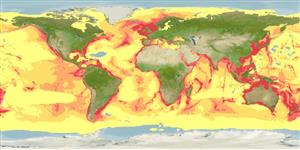
Ambiente: milieu / zona climática / intervalo de profundidade / gama de distribuição
Ecologia
Pelágico(a,os,as); oceanódromo (Ref. 75906); intervalo de profundidade 0 - 1316 m (Ref. 116169). Tropical
208994 Tursiops truncatus gephyreus. Southwest Atlantic.
Comprimento na primeira maturidade / Tamanho / Peso / Idade
Maturidade: Lm ?, range 240 - 260 cm Max length : 380 cm TL macho/indeterminado; (Ref. 1394); peso máx. Publicado: 650.0 kg (Ref. 1394)
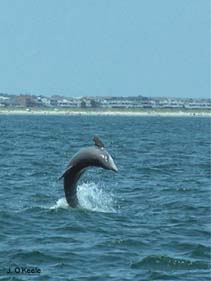
This coastal subspecies (Tursiops truncatus geyphyreus) can be distinguished from the nominate offshore subspecies (Tursiops truncatus truncatus) by the following diagnosable cranial features: W-shaped border of the antorbital notch (vs. U-shaped); barely or not visible interparietal bone (vs. clearly visible); cranial vertex from the posterior end of nasals to the nuchal crest is short and rectangular (vs. long and squared); left nasal bone noticeably smaller and more compressed antero-posteriorly than the right (vs. nearly symmetrical); Falciform lateral margin of the ascending process of right premaxilla (vs. straight or slightly concave); lateral margin of the ascending process of the maxillae over the preorbital process is deflected dorsally (vs. flat) (Ref. 128824).
Preyed upon by great white sharks (Ref. 32140). Dolphins are directly caught for use as shark-bait in Sta. Ana and Aparri, Philippines (Ref. 77119). Found primarily in coastal and inshore regions of tropical and temperate waters of the world (Ref. 936) and deeper channels between islands (Ref. 122680). Also inhabits pelagic waters, such as those in the eastern tropical Pacific (Ref. 936). In herds of less than 20 individuals (Ref. 801). Feeds either cooperatively or in solitary. They can obtain prey via 'fish whacking' and steering fish onto mudflats (Ref. 122680). Feeds on fish (Refs. 801, 936) crustaceans, and cephalopods (Ref. 801).
Ciclo de vida e comportamento de acasalamento
Maturidade | Reprodução | Desova | Ovos | Fecundidade | Larvas
Tan, J.M.L. 1995 A Field Guide to the Whales and Dolphins in the Philippines. Makati City: Bookmark. 125 p. (Ref. 936)
Categoria CITES (Ref. 108899)
Ameaça para o homem
Utilização humana
Pescarias: espécies comerciais; isco: usually
FAO - pescarias: desembarques, perfil da espécie | FishSource |
Ferramentas
Mais informação
Ecologia TróficaProdutos alimentares (presas)
Composição da dieta
Consumo alimentar
Predadores
Dinâmica das populaçõesCrescimentoIdades / tamanhos máximosComprimento-peso rel.Comprimento-comprimento rel.Frequência de comprimentoConversão de massaAbundância Ciclo de vidaReprodução
Maturidade
Fecundidade
Desova
Ovos
Desenvolvimento dos ovos
Larvas
FisiologiaConsumo de oxigénio
Relacionado com o ser humanoSelos, moedas, diversos.
Fontes da internet
Estimativas baseadas em modelos
Temperatura preferida
(Ref.
115969): 6.4 - 28.9, mean 20.3 (based on 16698 cells).
Vulnerabilidade da pesca
Very high vulnerability (76 of 100).
Categoria de preço
Unknown.