Mammalia |
Cetartiodactyla |
Delphinidae
環境:環境 / 気候帯 / 深さの範囲 / 分布範囲
生態学
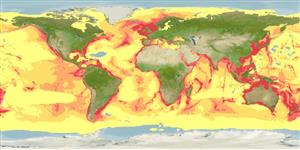
外洋の; 海洋回遊性 (参照 75906); 深さの範囲 0 - 1316 m (参照 116169). Tropical
208994 Tursiops truncatus gephyreus. Southwest Atlantic.
初回成熟時の長さ / サイズ / 重さ / 年齢
成熟: Lm ?, range 240 - 260 cm Max length : 380 cm TL オス/雌雄の選別がない; (参照 1394); 最大公表体重: 650.0 kg (参照 1394)
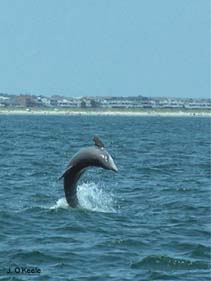
This coastal subspecies (Tursiops truncatus geyphyreus) can be distinguished from the nominate offshore subspecies (Tursiops truncatus truncatus) by the following diagnosable cranial features: W-shaped border of the antorbital notch (vs. U-shaped); barely or not visible interparietal bone (vs. clearly visible); cranial vertex from the posterior end of nasals to the nuchal crest is short and rectangular (vs. long and squared); left nasal bone noticeably smaller and more compressed antero-posteriorly than the right (vs. nearly symmetrical); Falciform lateral margin of the ascending process of right premaxilla (vs. straight or slightly concave); lateral margin of the ascending process of the maxillae over the preorbital process is deflected dorsally (vs. flat) (Ref. 128824).
Preyed upon by great white sharks (Ref. 32140). Dolphins are directly caught for use as shark-bait in Sta. Ana and Aparri, Philippines (Ref. 77119). Found primarily in coastal and inshore regions of tropical and temperate waters of the world (Ref. 936) and deeper channels between islands (Ref. 122680). Also inhabits pelagic waters, such as those in the eastern tropical Pacific (Ref. 936). In herds of less than 20 individuals (Ref. 801). Feeds either cooperatively or in solitary. They can obtain prey via 'fish whacking' and steering fish onto mudflats (Ref. 122680). Feeds on fish (Refs. 801, 936) crustaceans, and cephalopods (Ref. 801).
ライフサイクルと交尾行動
成熟 | 繁殖 | 放精 | 卵 | 生産力 | 幼生
主な参考文献
参考文献 | コーディネーター | 協力者
Tan, J.M.L. 1995 A Field Guide to the Whales and Dolphins in the Philippines. Makati City: Bookmark. 125 p. (参照 936)
ワシントン条約ステータス (参照 108899)
人間に対する脅威
人間の用途
水産業: 商業; 餌: usually
FAO - 水産業: 着陸, 種の外形 | FishSource |
用具
より多くの情報
人口動態成長最大年齢/サイズ長さ-重量比。長短関係。体長組成質量変換豊度
インターネットの情報源
モデルに基づく推定値
好ましい温度
(Ref.
115969): 6.4 - 28.9, mean 20.3 (based on 16698 cells).
漁業の脆弱性
Very high vulnerability (76 of 100).
価格帯
Unknown.