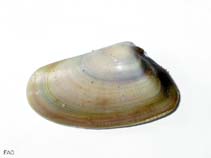
Bivalvia |
Cardiida |
Donacidae
محیط زیست: محیط زیست / منطقه آب و هوایی / تغييرات عمق / محدوده توزیع
بوم شناسي
Benthic; تغييرات عمق 0 - 25 m (مرجع 2758). Temperate; 61°N - 12°N, 18°W - 44°E (مرجع 78075)
Eastern Atlantic, the Mediterranean, Black Sea and Red Sea.
طول در اولین بلوغ / اندازه / وزن / سن
بلوغ: Lm 1.8 range ? - ? cm Max length : 4.4 cm SHL جنس نر / بدون خواص جنسي; (مرجع 2758); common length : 2.0 cm SHL جنس نر / بدون خواص جنسي; (مرجع 437)
Depth based on occurrence (Ref. 2758, p. 805); to be replaced with better reference. Minimum depth from Ref. 80266. Vital constituent of infra-littoral benthic fauna of sandy beaches. Preferrentially distributed at depths of 0 to 2 m. (Ref. 122884). Subtidal (Ref. 437), living in fine well sorted clean sand (Ref. 2780). Also found in estuaries (Ref. 122883). An exclusive species of the Superficial Fine Sand (SFS) biocoenosis as it's strictly dependent on the sediment’s nature and composition. Rapid and efficient burrower (Ref. 122884).
چرخه زندگی و رفتار جفتگیری
بلوغ | تولید مثل | تخم ریزی | تخم ها | باروری | توزاد ( لارو)
Gonochoric.
مآخذ اصلی
مراجع | هماهنگ كننده | همكاران
Fischer, W., G. Bianchi and W.B. Scott (eds.) 1981 Bivalves. 6: pag.var. In FAO species identification sheets for fishery purposes. Eastern Central Atlantic (fishing areas 34, 47; in part). Canada Funds-in-Trust. Ottawa, Department of Fisheries and Oceans Canada, by arrangement with the Food and AgriculturesOrganization of the United Nations, 1-7: pag.var. (مرجع 437)
وضعيت در فهرست قرمز IUCN
(مرجع 130435: Version 2025-2 (Global))
وضعيت از نظر سايتس (مرجع 108899)
Not Evaluated
Not Evaluated
خطر برای انسان ها
استفاده انسانی
ماهي گيري – شيلات: تجاري
| FishSource |
ابزارها
اطلاعات بيشتر
بومشناسی گرمسیریاقلام غذایی (طعمهها)
تركيب غذايي
مصرف غذايي
شکارچیان
مرتبط با انسانتمبر، سکه، متفرقه.
منابع اينترنتي
تخمینها بر اساس مدلها
دمای ترجیحی
(Ref.
115969): 12.4 - 21.6, mean 19 (based on 746 cells).
جهندگی
زياد, كمينه زمان لازم براي دو برابر شدن جمعيت ، كمتر از 15 ماه (K=0.3-1.93).
آسیبپذیری ماهیگیری
Low vulnerability (15 of 100).