Demospongiae |
Suberitida |
Halichondriidae
Milieu: milieu / Klimaatzone / Diepte / verspreidingsgebied
Ecologie
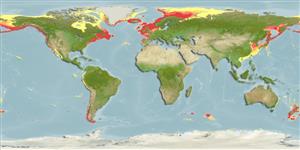
Sessile; diepte 0 - 534 m (Ref. 119523). Temperate; 85°N - 80°S, 180°W - 180°E
Northern Pacific, Northern Atlantic, Antarctic and the Arctic.
Lengte bij maturiteit / Grootte / Gewicht / Leeftijd
Maturiteit: Lm ? range ? - ? cm Max length : 60.0 cm WD mannelijk / geslacht onbekend; (Ref. 865)
Filters small suspended particles, which includes free bacteria and colloidal organic matter (Ref. 96471). Trophic level 1.7-2.3 (Ref. 96418). Part of the fouling communities attached to raft frames in mariculture zones (Ref. 127121).
Levenscyclus en paargedrag
Maturiteit | Voortplanting | Paaien | Eieren | Fecunditeit | Larven
Members of the class Demospongiae are hermaphroditic. Life cycle: The zygote develops into parenchymella larva (free-swimming) before settling down on a substrate where it grows into a young sponge.
Harms, J. 1993 Check list of species (algae, invertebrates and vertebrates) found in the vicinity of the island of Helgoland (North Sea, German Bight) - a review of recent records. Helgoländer Meeresunters 47:1-34. (Ref. 2711)
Status op de Rode Lijst van het IUCN
(Ref. 130435: Version 2025-2 (Global))
CITES status (Ref. 108899)
Not Evaluated
Not Evaluated
Gevaar voor de mens
Gebruik door de mens
| FishSource |
Tools
Meer informatie
Trofische ecologieVoedsel (prooien)DieetsamenstellingVoedselconsumptiePredatoren PopulatiedynamicaGroei
Max. leeftijden / maten
Lengte-gewicht rel.
Lengte-lengte rel.
Lengtefrequenties
Massaconversie
Abundantie
LevenscyclusVoortplantingMaturiteitFecunditeitPaaienEierenOntwikkeling van de eierenLarven FysiologieZuurstofverbruik
Menselijk gerelateerdPostzegels, munten, diversen.
Internetbronnen
Schattingen op basis van modellen
Gewenste temperatuur
(Ref.
115969): 2.1 - 25, mean 9.7 (based on 2098 cells).
Kwetsbaarheid van de visserij
Moderate vulnerability (44 of 100).
Prijsklasse
Unknown.