Asteroidea |
Valvatida |
Asterinidae
Milieu: milieu / Klimaatzone / Diepte / verspreidingsgebied
Ecologie
Benthic; diepte 0 - 302 m (Ref. 93256). Subtropical
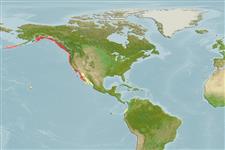
Northeast Pacific: Alaska to Gulf of California. Subtropical to temperate.
Lengte bij maturiteit / Grootte / Gewicht / Leeftijd
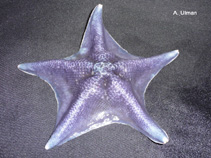
Maturiteit: Lm ? range ? - ? cm Max length : 20.0 cm WD mannelijk / geslacht onbekend; (Ref. 865)
Found on rocks, broken shells, gravel and sand on exposed coasts but not on areas under direct influence of the surf (Ref. 93256).
Levenscyclus en paargedrag
Maturiteit | Voortplanting | Paaien | Eieren | Fecunditeit | Larven
Members of the class Asteroidea exhibit both asexual (regeneration and clonal) and sexual (gonochoric) means of reproduction. Life cycle: Embryos hatch into planktonic larvae and later metamorphose into pentamorous juveniles which develop into young sea stars with stubby arms.
Lambert, P. 2000 Sea stars of British Columbia, Southeast Alaska and Puget Sound. Canada: UBC Press. 186 p. (Ref. 93256)
Status op de Rode Lijst van het IUCN
(Ref. 130435: Version 2025-2 (Global))
CITES status (Ref. 108899)
Not Evaluated
Not Evaluated
Gevaar voor de mens
Gebruik door de mens
| FishSource |
Tools
Meer informatie
PopulatiedynamicaGroei
Max. leeftijden / maten
Lengte-gewicht rel.
Lengte-lengte rel.
Lengtefrequenties
Massaconversie
Abundantie
LevenscyclusVoortplantingMaturiteitFecunditeitPaaienEierenOntwikkeling van de eierenLarven Menselijk gerelateerdPostzegels, munten, diversen.
Internetbronnen
Schattingen op basis van modellen
Gewenste temperatuur
(Ref.
115969): 7.1 - 11.6, mean 8.4 (based on 38 cells).
Kwetsbaarheid van de visserij
Low vulnerability (10 of 100).
Prijsklasse
Unknown.